
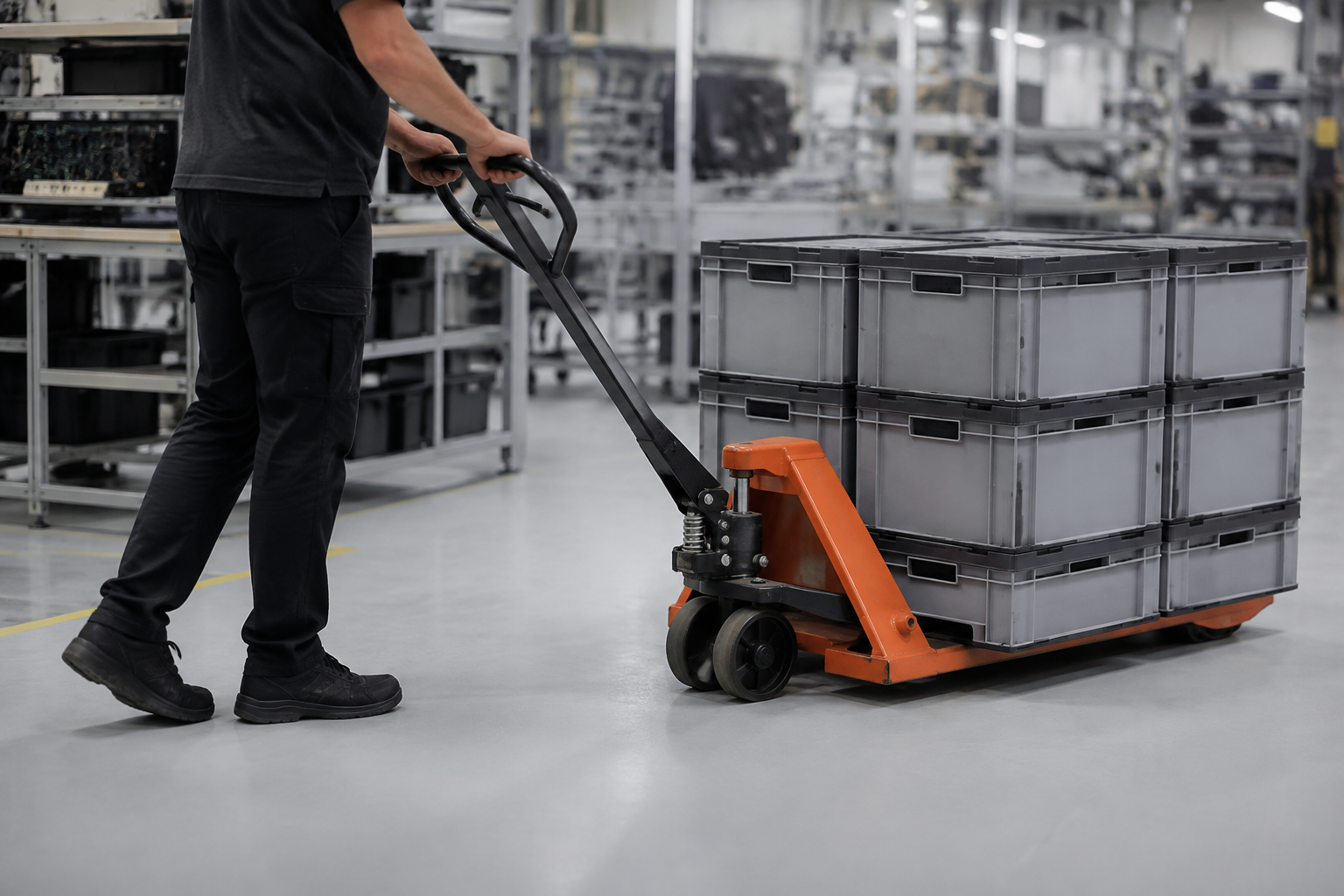
Rolling carts and pallet jacks across smooth epoxy floors generates static. In semiconductor, PCB, and medical-device cleanrooms, that charge must safely dissipate into a grounded floor instead of discharging through sensitive components.
The Problem: Lost Yield and Marked Floors
Standard polyurethane and nylon wheels are electrical insulators. They trap charge, which can build to thousands of volts before discharging into electronics, causing immediate shorts or latent defects.
Low-grade “anti-static” wheels may depend on coatings that wear away or carbon fillers that leave black streaks and dust on cleanroom floors.
Cleanroom-Grade ESD Polyurethane
A permanent conductive network is built into the polymer matrix, with volume resistance controlled between 10⁵ and 10⁹ ohms. Conductivity remains through tread wear, allowing charge to dissipate continuously. The non-marking formulation avoids carbon dust and black floor marks while retaining premium polyurethane wear resistance.
The Blind Spot: A Broken Conductive Path
Installing an ESD tread alone does not make a cart ESD-safe. An insulating core or bearing grease can interrupt the path. The complete route must remain conductive: ESD tread → conductive core → bearing → axle → equipment frame → grounded floor.
Confirm the resistance target and test method, then request samples for testing on your floor.