How to Measure a Pallet Jack Wheel
Record diameter, tread width, bore and hub length before ordering a replacement wheel.
Read Article
Clear guidance for measuring, selecting, and specifying pallet jack wheels.
Search practical answers from our engineering and export teams, then explore application notes and selection guides.
Material choice directly affects floor protection, noise, load performance, and service life.
Selection Tip: Email us your floor type, load, speed, and operating environment for a recommendation.
We support major North American pallet jack brands and can manufacture from drawings or physical samples.
Interchangeable with many OEM 74 × 98 mm applications, including Crown PTH50, Raymond RJ50/RJ50P, Hyster/Yale W50Z, Big Joe standard manual models (excluding EZ30), Wesco CPI/Deluxe, and Vestil PM5/PM6 wide-fork models.
Commonly used on Vestil PM5/PM6 narrow-fork models.
A widely used steering-wheel size across manual pallet jack platforms.
Fitment Tip: Send the old wheel or a dimensioned sketch to confirm compatibility before ordering.
Yes. OEM production can match an existing drawing, sample, logo, and packaging specification. ODM service can develop a wheel around target load, floor, speed, temperature, and environmental requirements.
A 20GP container should be planned around a practical cargo weight of approximately 39,200 lbs (17.78 metric tons), subject to route and carrier limits.
Certificates and relevant test records can be supplied for qualified projects.
Efficiency Tip: Retail-ready packaging can reduce receiving, labeling, and repacking labor.
Samples are normally charged at production cost plus shipping, and the sample fee can be credited against the first bulk order. Qualified buyers may receive a free standard sample while covering courier cost.
Use samples to verify fit, rolling resistance, noise, floor marking, bearing performance, and load behavior.
Specialty polyurethane and stainless-bearing configurations can serve environments from -40°F to 32°F. Standard polyurethane may crack below -4°F.
For temperatures above 176°F (80°C), consider high-temperature nylon rated up to 428°F (220°C) or a suitable cast-iron-core polyurethane construction.
Specify stainless hubs or bearings, sealed bearings, and compatible nylon or specialty polyurethane.
Nylon provides broad chemical resistance. Polyurethane compatibility should be checked against the exact chemical and concentration.
Typical reference ranges: polyurethane -22°F to +176°F; nylon -4°F to +248°F, with specialty grades to +428°F; TPR -22°F to +149°F.
Yes. Made-to-order solutions are available for electronics, clean production, hazardous handling, and other controlled environments.
Projects involving ATEX or OSHA-classified areas must be reviewed against the exact equipment, zone, and certification requirement. Typical development and production lead time is 30–45 days.
Actual noise depends on tread hardness, floor finish, bearings, load, speed, and debris. For noise-sensitive environments, softer polyurethane and precision bearings are usually the best starting point.
Tell us the floor material and required load, and explicitly request a non-marking compound when appearance is critical.
No matching answers. Try a broader keyword or another category.
Selection guides, application notes, and practical maintenance advice.
Record diameter, tread width, bore and hub length before ordering a replacement wheel.
Read Article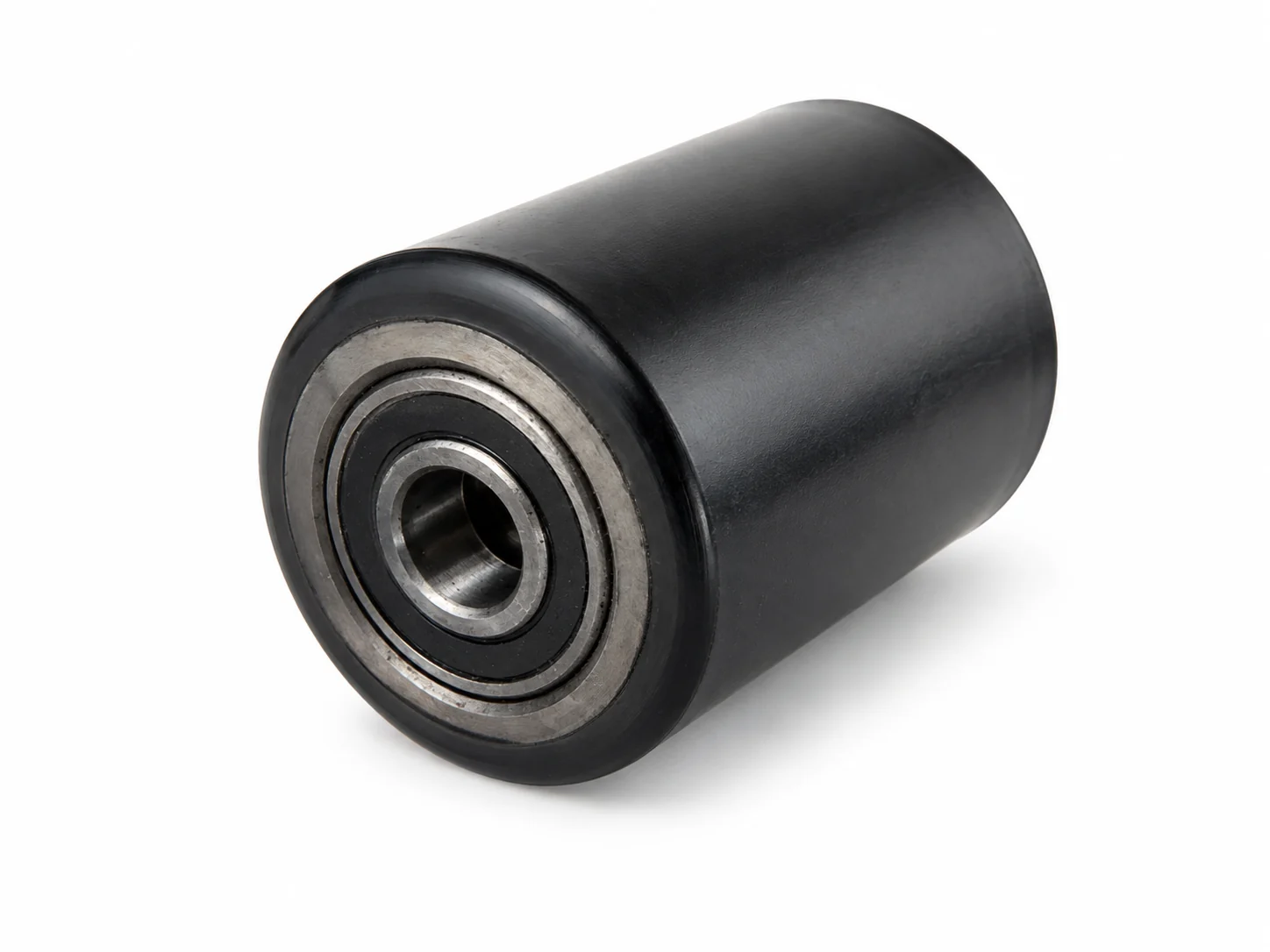
Compare rolling resistance, floor protection, noise, load and operating temperature.
Read Article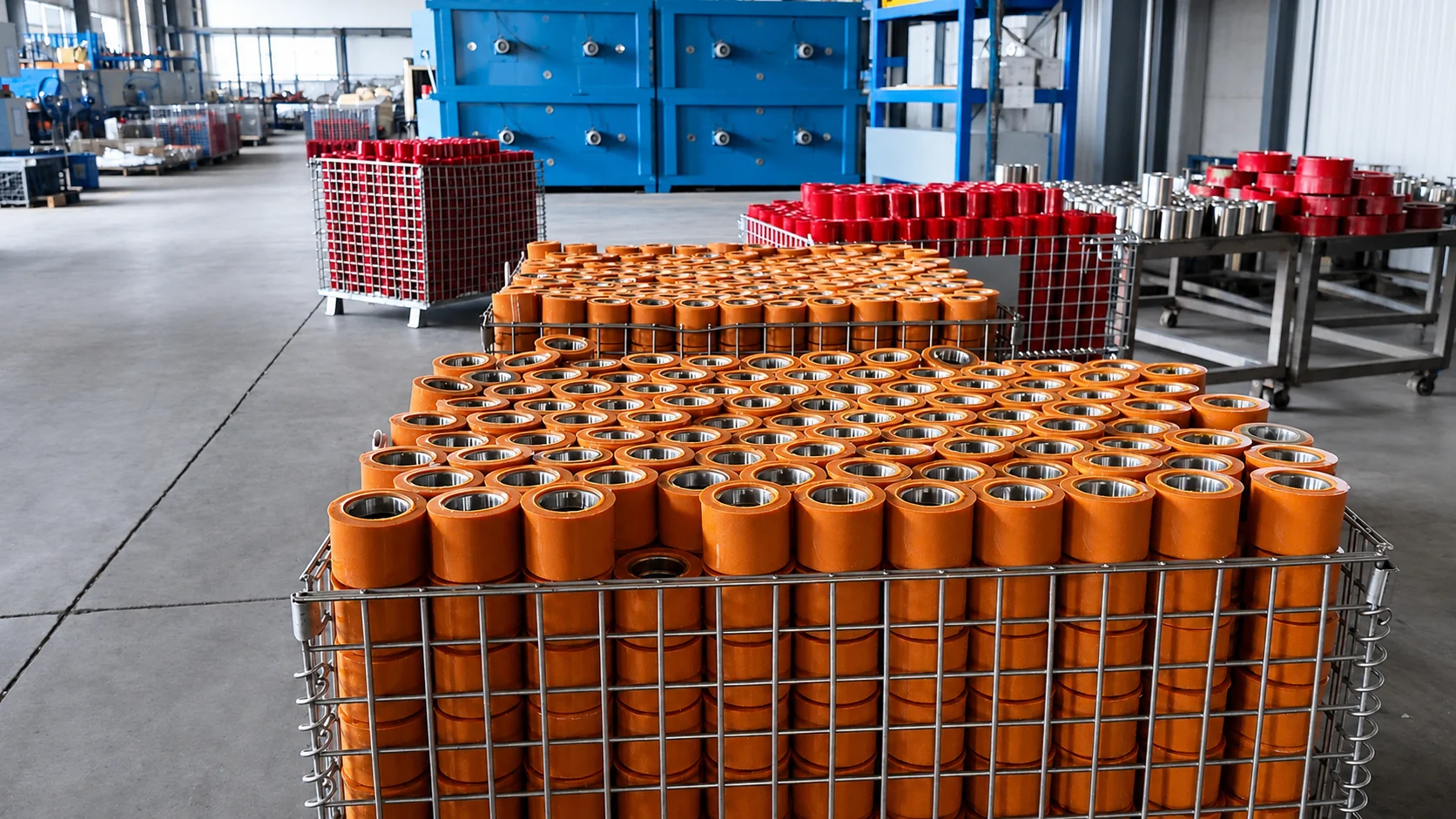
Match tread and core construction to smooth concrete, rough floors, moisture and debris.
Read Article
A clear drawing, sample, load, equipment model and annual quantity make review faster.
Read Article